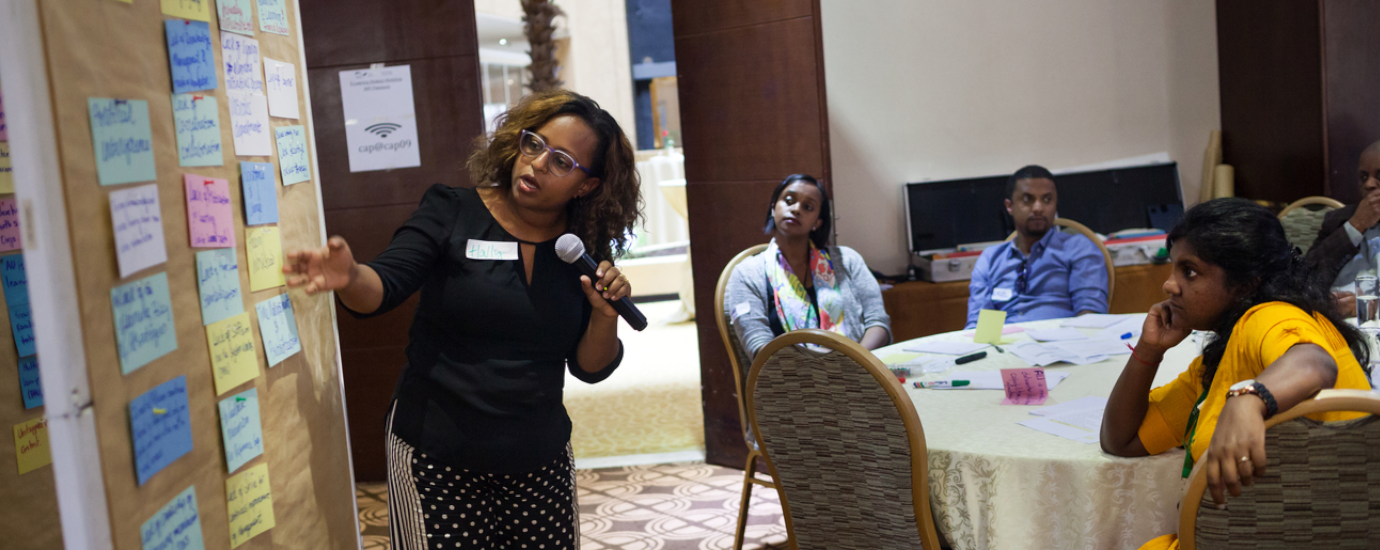
Indian woman showing three indian participants a board with post its on it.

Capacity Development at ISC3

Capacity Development is a central pillar of ISC3’s work. We support focus and partner countries in advancing Sustainable Chemistry by strengthening individual, organisational and systemic capacities.

Our approach goes beyond stand-alone training sessions. ISC3 understands Capacity Development as a long-term, integrated process that links learning and education and is embedded in national strategies, policies and innovation systems.

Our Approach

ISC3 works closely with focus and partner countries to build locally anchored structures that connect education, industry and policy. Capacity Development activities are tailored to national contexts and developed together with key stakeholders to ensure relevance, ownership and long-term impact.

We address capacities at different levels:

  • Individuals: strengthening knowledge, skills and competencies
  • Organisations: supporting institutions to advance Sustainable Chemistry
  • Systems: fostering dialogue, coordination and cooperation across sectors

What We Offer

ISC3 provides a portfolio of Capacity Development formats, including:

  • Training and learning formats for policymakers and practitioners
  • Training-of-Trainers approaches to enable scaling and replication
  • Academic cooperation with partner universities, integrating Sustainable Chemistry into curricula and degree programmes
  • Digital learning opportunities to broaden access and reach

From Capacity Development to Impact

A key element of ISC3’s approach is the development of local clusters that bring together universities, government institutions, private-sector actors and civil-society partners. These clusters act as multiplier structures and support sustained engagement and cooperation at the country level.

Through this integrated approach, ISC3 supports countries in developing their own pathways towards Sustainable Chemistry and contributes to a more sustainable and innovative future.