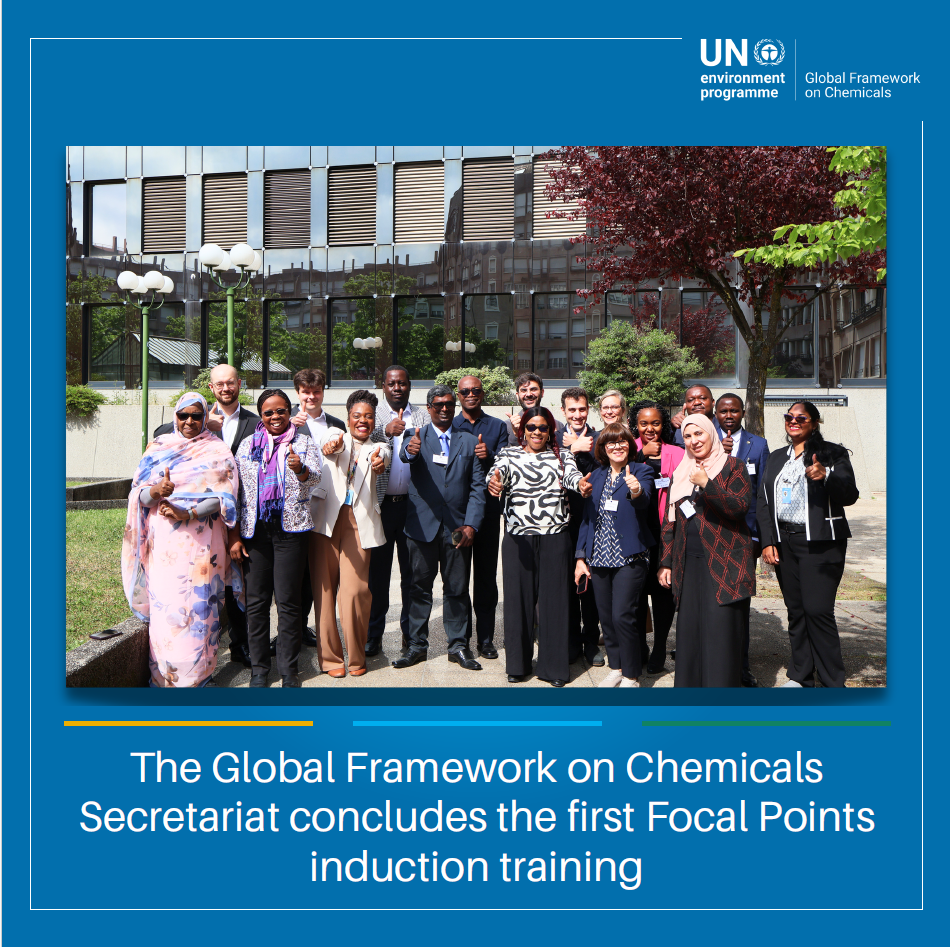
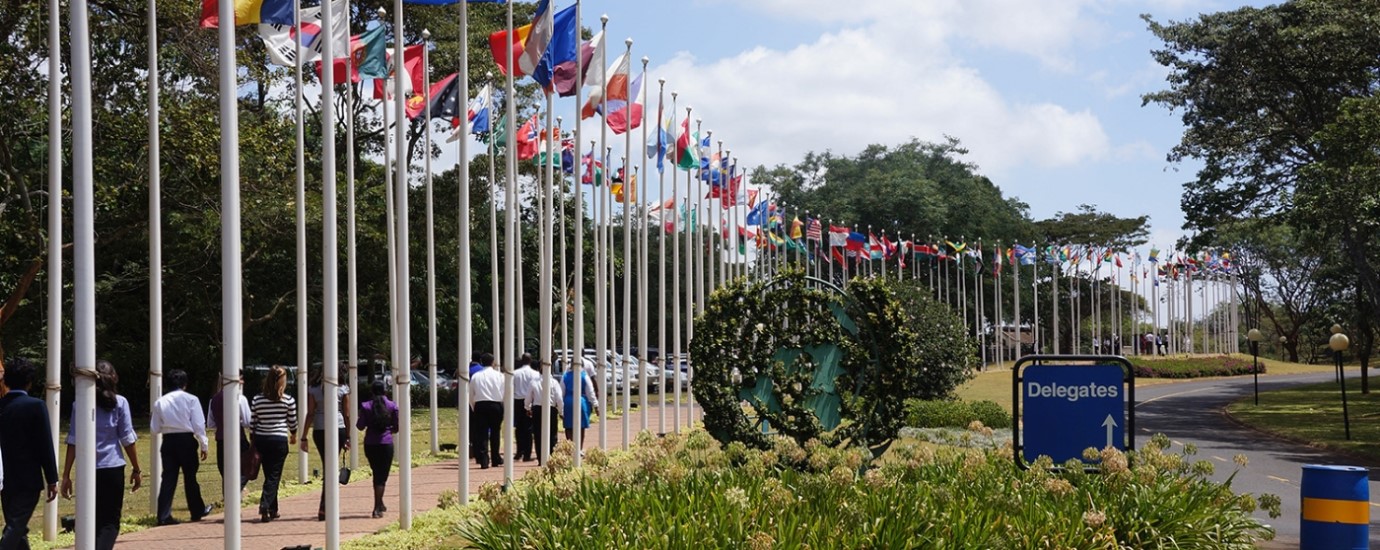
An outdoor view of the Nairoba UNEP headquarter with delegates walking through a path paved with flag poles

Global Framework on Chemicals (GFC) Implementation

The Global Framework on Chemicals (GFC) was adopted in September 2023 at the Fifth International Conference on Chemicals Management (ICCM5) in Bonn, Germany and follows the Strategic Approach to International Chemicals Management (SAICM). Importantly, the GFC complements the existing system of international chemicals and waste conventions, such as the Basel, Rotterdam and Stockholm (BRS) Conventions. While these treaties focus on legally binding rules for specific substances, waste streams, or trade aspects, the GFC provides a broader, voluntary policy framework that fosters innovation, stakeholder collaboration, and cross-sectoral action. Together, they form a more comprehensive global governance architecture for chemicals and waste.

an icon of a molecular bond

The GFC sets out a global policy framework for the safe and sustainable management of chemicals and waste. With five strategic objectives and a set of targets, the GFC provides a roadmap for governments, industry, academia, and civil society to work together towards healthier people, a cleaner environment, and more sustainable production and consumption.

A key example is Target D1, which calls for the enhancement of Sustainable Chemistry innovations, safer alternatives, and new solutions. This makes clear that chemicals management is not only about risk control but also about fostering innovation that contributes to sustainability, circularity and the transformation towards a more sustainable chemical sector among supply chains.

ISC3 Activities for GFC Implementation

Conferences, Workshops, Sessions, Multi-Stakeholder Dialogues

Achieving the goals of the Global Framework on Chemicals (GFC) requires stronger action by all actors within their fields as well as closer collaboration across sectors and stakeholder groups. The GFC is multi stakeholder and multisectoral in nature, involving sectors such as environment, health, agriculture and labour, and engaging stakeholders across the life cycle of chemicals at local, national, regional and global levels. It also stresses the importance of considering environmental and social aspects that are essential for the sound management of chemicals and waste.

At the opening session of the GFC Open-Ended Working Group (OEWG 1.0), ISC3 was actively involved, contributing to Multi-Stakeholder Day events, fireside chats and expert groups, and supporting the dialogue on Green and Sustainable Chemistry in key sectors such as electronics, textiles and health.

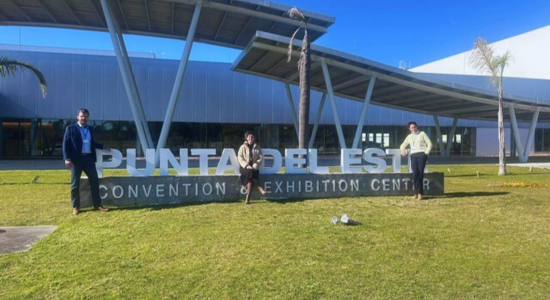
three people standing next to letters saying Punta del Este
Dr. Thomas Wanner (Managing Director) and Dr. Claudia Vanesa Piattoni (one of the entrepreneurs of the ISC3 Founders Fireside Chat) along with Anna Isabel Becker (Director Policy & Sustainability Innovation) in front of the convention center in Uruguay in June 2025.

Partnerships and Stakeholder Involvement

Green & Sustainable Chemistry Expert Group & Electronics Group

For supporting the global implementation of the GFC the ISC3 engages in the Implementation Programme 2 (“Strengthening Economic and Industry Sector Engagement and Action Along Value Chains”), which seeks to mobilise economic actors, strengthen value chain cooperation and foster innovation for safer and more sustainable practices. The programme strengthens sectoral strategies and drives the transformation of chemicals and waste management by combining environmental integrity, human safety and economic performance across value chains.

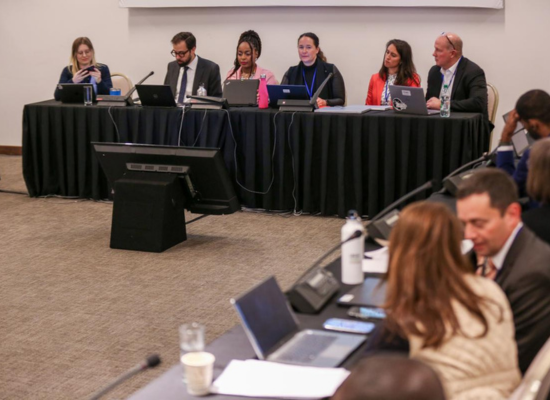
conference room
Session at the Multi-Stakeholder Day organised by the expert group of Green and Sustainable Chemistry Innovations and Solutions.
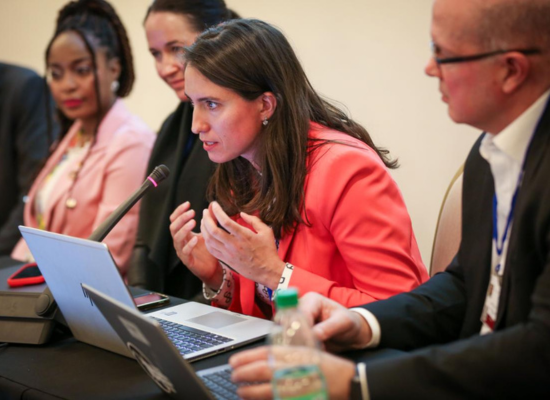
women in red blazer speaking in a table microphone
Input of Anna Isabel Becker at the thematic session on advancing Green and Sustainable Chemistry in high-impact sectors and value chains through the GFC with other stakeholders from industry, multilateral environmental organisations and civil society.

The ISC3 contributes with its expertise and international network on Sustainable Chemistry to support progress towards the objectives of the Global Framework on Chemicals. In the Green and Sustainable Chemistry Expert Group. ISC3 supports by providing policy input, facilitating dialogue among industry, start-ups, academia and governments, and showcasing practical examples of sustainable chemistry solutions in different sectors. The Electronics Sector Implementation Programme is a sector specific mechanism under the GFC, designed to accelerate the implementation of sustainable chemicals and waste management strategies throughout the life cycle of electronic products. ISC3 engages in the Electronics Sector Implementation Programme as electronics is a key focus area, bringing its expertise to the UN level to advance sustainable solutions and support the Global Framework on Chemicals.