Turning plastic waste into opportunities
Rôbalôtô began, as many start-ups do, with a simple observation of a pressing problem. In 2021, Aymane Gbadamassi, now Co-founder and CEO, lived next to a school where he regularly saw students burning plastic waste due to the lack of proper waste management solutions. More broadly, he became increasingly aware of the widespread plastic pollution in his environment. Over time, he realised that this growing waste problem could be addressed differently − by collecting, structuring, and transforming plastic waste into something valuable.
That same year, Rôbalôtô was launched with the goal of reducing environmental pollution while promoting more sustainable use of plastic. Today, the company is led by four co-founders and comprises a team of seven. Aymane holds a BSc in Accountancy from the Université de Lomé (Togo) and brings experience in environmental management. Alongside him are Franck Amegnaglo, Web Developer and Programmer; Kéziah Kpatide, Communication and Partnership Officer; and Christ Atsu, Logistics and Creative Officer.
Like many early-stage ventures, the team faced several challenges. One of the first was gaining the trust and approval of local authorities, which is required before launching new initiatives in Togo. Another challenge was raising awareness about the value of plastic as a recyclable resource.
“Many people used to burn plastic waste; they did not know what else to do with it or that it could be recycled into something else”
, Aymane explains.As the team progressed, they realised that the issue was not limited to their local context but extended across neighbouring countries and much of Africa. Expanding their model to new regions presented additional hurdles, alongside the ongoing challenge of securing funding to develop and scale the idea.
The name Rôbalôtô means “plastic collector” in Ewé, a local language widely spoken in southern Togo. The founders chose it to reflect the company’s roots and to connect directly with local communities before expanding beyond national borders.
One man´s trash…
Rôbalôtô identified two interconnected challenges and turned them into a single solution: plastic burning in schools and a shortage of plastic as a raw material in industry. To address plastic pollution in schools, the start-up introduced smart, connected bins in local institutions. These bins are equipped with sensors and an app coupled with a data collection system that helps identify the most used types of plastic, the weight or the bin fill level. Connected to a real-time, detachable control system, the bins allow Rôbalôtô to analyse waste patterns and develop tailored solutions for each school.
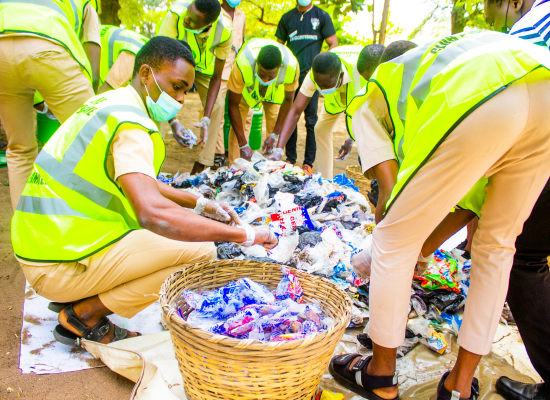
For example, in Togo, drinking water is often sold in small plastic sachets, commonly known as “pure water sachets”. Due to their low (production) cost, they are widely used but frequently discarded and burned after use.
“If we see that this type of plastic dominates the waste stream, we can raise awareness and encourage alternatives such as reusable water bottles”
, explains Aymane.In parallel, Rôbalôtô has developed a marketplace that connects schools − as suppliers of plastic waste − with industrial companies that use plastic as a raw material. In this way, waste is given a second life: what was once discarded becomes a valuable resource, supporting a more circular production system.
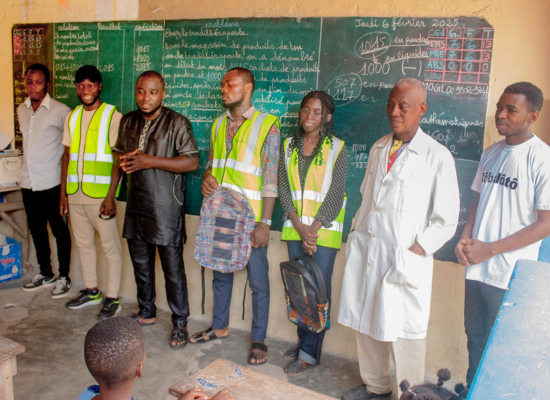
Education is another key pillar of the model. The start-up has established “environmental clubs” in schools, where students are responsible for collecting and managing plastic waste. They are trained in proper sorting and recycling practices, and part of the revenue generated from selling the plastic is reinvested into these clubs. This approach helps spread awareness beyond schools, as students carry their knowledge into their households and communities.
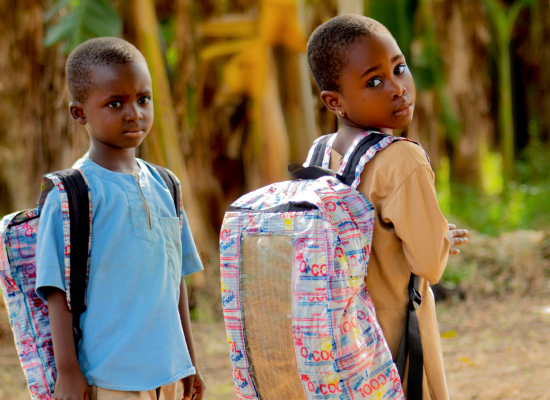
In addition, Rôbalôtô has developed a “solar bag” − a backpack made from layers of recycled plastic and equipped with a photovoltaic film, a battery, and LED lights. During the day, the solar panel stores energy in the battery, which can later be used to power the lights. The bags are designed to support students in rural areas without reliable access to electricity, enabling them to study after dark. Moreover, the backpack features a durable, long-lasting design. The solar film is replaceable − users can return the bag to Rôbalôtô for servicing − and once the backpack reaches end of life, its materials can be separated and directed to plastic recycling companies. Part of the revenue from these products also supports schools and their environmental clubs. The solar bag is part of a broader product line called “Robanou,” meaning “things made with sachet” in the Mina language.
Rôbalôtô’s system combines data collection through smart bins and its RôbaTrack app to structure and optimise plastic waste management. Its marketplace, Rôbassimé, enables collected plastic to re-enter the value chain. So far, the company has achieved a recycling rate of 68% in participating schools − a significant improvement compared to existing plastic waste disposal solutions. The majority of the collected plastic is directly transformed into bags, while the remainder is sold to companies for further processing.
By combining technology, education, and access to solar energy, Rôbalôtô creates impact across environmental, social, and economic dimensions, benefiting students, communities, and the wider ecosystem.
Next up at Rôbalôtô
Rôbalôtô is currently focused on expanding access to its marketplace, particularly in rural areas. The team also aims to reach more schools through partnerships, deepen its educational programmes, and raise awareness about plastic pollution among students. Looking ahead, the company plans to scale its solution to more cities and expand into neighbouring countries. In parallel, Rôbalôtô is working to raise awareness of its solar bag and expand its reach into rural communities where access to solar energy remains limited.
With their innovative approach, Rôbalôtô, who joined the ISC3 Global Start-up Service in January 2026, actively contributes to SDG7 (Affordable and Clean Energy), SDG11 (Sustainable Cities and Communities), SDG12 (Responsible Consumption and Production), SDG13 (Climate Action).